Finding easy ways to practice handwriting without making it boring is the key to turning a mechanical task into a creative ritual. Many people view penmanship as a chore from their school days, but it is actually a powerful tool for mindfulness and personal expression.
By integrating simple, engaging habits into your daily life, you can improve your control and flair without feeling like you are back in a classroom. Whether you are aiming for more legible notes or the elegance of refined script, these techniques will help you develop better fine motor skills while keeping the process genuinely enjoyable.
The Science of Muscle Memory in Penmanship
Improving your handwriting is fundamentally about building muscle memory through consistent, low-pressure movement. When you write, your brain signals specific nerves in your fingers and wrist to coordinate complex patterns.
Repeated, intentional practice helps these pathways become automated, which is why even ten minutes of daily focus can lead to noticeable improvements in your handwriting consistency. You do not need to spend hours on repetitive drills to see results.
Focusing on the feeling of the pen against the paper is a great way to stay engaged. Pay attention to how your hand moves across the page rather than just the final look of the letters.
If your grip is too tight, your hand will fatigue quickly, leading to shaky lines and a cramped style. Relaxing your fingers and letting your arm do the heavy lifting helps maintain a steady slant angle throughout your writing sessions.
Integrating Writing into Daily Rituals
The most effective way to avoid boredom is to make handwriting practice a byproduct of something you already love to do. Instead of staring at a blank sheet of paper, use your daily to-do lists or grocery reminders as a canvas for your lettering.
By treating every written note as an opportunity to practice, you remove the pressure of “studying” and turn it into a functional habit. This approach keeps your hand active throughout the day without it feeling like a burden.
Creative journaling is another excellent outlet for this kind of practice. You can experiment with different styles and tools while documenting your thoughts, which makes the act of writing feel purposeful.
Whether you are using a standard ballpoint or a smooth fountain pen, the texture of the paper and the flow of the ink can become a sensory experience. Over time, this makes the act of writing something you look forward to rather than a task you try to finish as fast as possible.
Choosing the Right Tools for Motivation
Investing in quality stationery can make a world of difference in your desire to practice. A high-quality notebook with paper that doesn’t bleed or feather allows you to see your progress clearly, which is inherently rewarding.
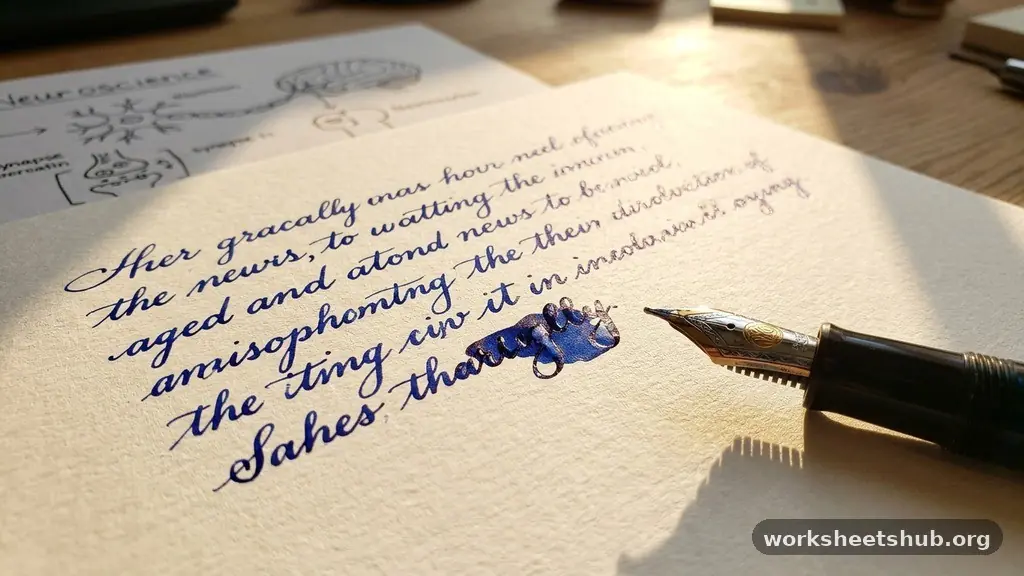
Many enthusiasts find that using a specific pen, such as a fountain pen, encourages a slower, more deliberate pace. The weight and balance of a well-made instrument often change how you hold your hand, naturally promoting a more ergonomic grip.
Beyond the pen itself, consider the variety of inks available to keep things interesting. Switching between colors or trying out different nib widths can transform a standard alphabet practice session into a creative project.
If you find your current tools aren’t sparking joy, don’t be afraid to try something new. The goal is to create a physical environment where you feel excited to put pen to paper, regardless of what you are actually writing.
Mixing Doodling with Technical Drills
Doodling is often dismissed as a distraction, but it is actually a fantastic way to develop the dexterity needed for beautiful penmanship. By drawing borders, swirls, or simple shapes around your notes, you are practicing line control without the rigidity of traditional drills.
This allows you to experiment with pressure and speed in a low-stakes environment. It keeps your hand loose and prevents the cramping that often comes with strictly controlled writing exercises.
You can also incorporate decorative elements into your daily writing to make it more visually appealing. Adding small flourishes to the tails of your letters or practicing block lettering for your headings can bridge the gap between functional writing and artistic expression.
This practice builds your fine motor skills while allowing you to personalize your work. It turns a boring page of notes into a piece of art that you are proud to display.
Leveraging Bullet Journaling for Progress
Bullet journaling is a highly effective structure for anyone looking to improve their writing without feeling restricted by lines. It encourages a mix of lists, trackers, and long-form writing, giving you plenty of space to test different styles.
Because you are creating the layout yourself, you are constantly practicing your spacing and alignment. This method naturally enforces better handwriting consistency because you want your journal to look organized and readable.
Tracking your progress within your journal can also provide a sense of accomplishment. You might dedicate one page a week to a specific quote written in your best cursive script or a new font style you are learning.
Seeing your improvement over several weeks is a powerful motivator that keeps you engaged. It shifts the focus from the act of practicing to the outcome of creating something beautiful and useful.
Understanding the Role of Lettering Worksheets
While they might seem repetitive, using structured lettering worksheets can be surprisingly relaxing when approached with the right mindset. The key is to treat them as a meditation rather than a test.
Put on some music or a podcast, and focus entirely on the rhythm of the pen. If you limit these sessions to short, manageable bursts, they never become overwhelming or tedious.
It is helpful to keep a variety of templates on hand so you can switch between styles when you feel bored. One day you might focus on the loops of a cursive script, and the next you might work on the sharp geometry of a modern sans-serif style.
Variety is the antidote to monotony. By keeping your practice sessions diverse, you ensure that your hand is always learning new movements and patterns.
Comparison of Practice Methods
Different approaches yield different results depending on your personal goals and available time. Choosing the right method is essential for long-term consistency.
| Method | Primary Benefit | Time Commitment |
|---|---|---|
| Bullet Journaling | High creativity and utility | Daily (10-15 mins) |
| Structured Worksheets | Rapid technical improvement | Weekly (20 mins) |
| Doodling & Flourishing | Hand relaxation and dexterity | Whenever you have a pen |
| Daily Journaling | Consistency and reflection | Daily (10 mins) |
Common Pitfalls and How to Avoid Them
The most common mistake people make is trying to force a perfect style right away. Handwriting is a slow evolution, and comparing your first attempts to experts on social media will only lead to frustration. Instead, focus on your own growth.
If your writing is more legible today than it was last month, you are succeeding. Remember that your personal style is a reflection of your personality, not just a set of rules.
Another issue is neglecting the physical aspects of the process. If you find your handwriting is consistently poor, check your posture and the way you sit at your desk. Proper lighting and a comfortable chair can significantly reduce tension in your shoulders and neck.
When your body is relaxed, your writing will naturally follow suit. Don’t be afraid to take breaks and stretch your hands if you feel any stiffness creeping in.
Frequently Asked Questions
How long does it take to see real improvement in handwriting?
Most people notice a significant change in their legibility and consistency after about four to six weeks of consistent, daily practice. The key is not the intensity of the sessions but the frequency of the engagement.
Do I need expensive pens to improve my penmanship?
Absolutely not. While high-quality tools can make the process more enjoyable, you can develop excellent handwriting with a standard ballpoint pen. Focus on your grip and pressure control rather than the brand of your stationery.
Should I focus on cursive or print first?
It is better to focus on the style you actually use most often in your daily life. If you want to improve your professional notes, work on your print. If you want to explore calligraphy or creative writing, focus on cursive script.
How can I stop my hand from cramping while writing?
Cramping is usually a sign that you are gripping the pen too tightly. Try to soften your grip and use your arm and shoulder to move the pen rather than just your fingers. Taking short breaks every few minutes also helps.
Is it possible to change my handwriting style entirely?
Yes, it is possible to change your style, but it requires patience and repetitive practice. Start by analyzing the specific letters you want to change, and practice those in isolation before moving on to full sentences.
Conclusion
Finding easy ways to practice handwriting without making it boring is a journey of self-discovery and steady improvement. By shifting your perspective from tedious drills to creative expression, you turn every page into a chance to refine your craft. Whether you are filling a bullet journal, experimenting with new pens, or simply doodling in the margins, the consistency you build will eventually become second nature.
Start today by picking one small habit that fits your schedule, such as writing your daily to-do list with a bit more intention. As you see your progress, you will likely find yourself seeking out more opportunities to write.
Remember that there is no deadline for perfection, only the joy of the process itself. Keep your hand loose, stay curious about your style, and enjoy the unique character that your own handwriting brings to the world.