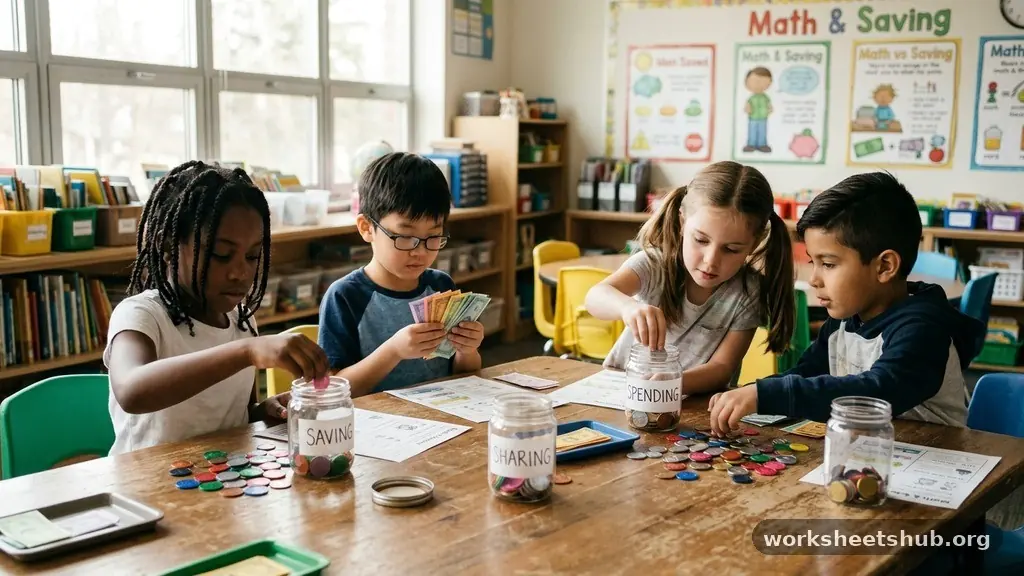
Incorporating fun money skills activities for young students is one of the most effective ways to build a foundation for lifelong financial literacy. By moving beyond abstract concepts and into hands-on experiences, children develop a comfort level with currency and value that serves them well into adulthood.
Whether you are a parent or an educator, these practical exercises help children grasp the mechanics of exchange and the importance of planning. You will find that when learning feels like play, the lessons about saving, spending, and value stick much longer than any traditional lecture could possibly achieve.
The Core Concepts of Early Financial Education
The most important takeaway for any educator is that financial literacy begins with tangible interaction. Children often see adults using digital cards or phones to pay for items, which hides the physical reality of money.
To counter this, you should prioritize tactile activities that involve physical cash and coins. This helps bridge the gap between “getting something” and the “cost” associated with that item.
Establishing a routine of counting coins is the first step in currency recognition. You can start by sorting loose change into groups, identifying the names, and understanding the relative value of a penny versus a quarter.
This basic skill builds the confidence needed for more complex tasks like price comparison. When a child understands that ten dimes equal one dollar, they begin to visualize the composition of money.
Basic budgeting also starts with small, manageable amounts, such as a weekly allowance. By giving a child a set amount of money, you provide them with a finite resource to manage.
They must decide how to allocate these funds between immediate desires and long-term saving goals. This simple process creates a powerful lesson in opportunity cost that lasts a lifetime.
Gamifying Currency Recognition
Turning the act of learning into a game is essential for sustaining interest. One popular activity involves creating a “classroom store” where students use play money to purchase small items or privileges.
This simulation allows children to practice commerce in a low-stakes environment. They learn how to calculate totals, handle change, and verify that they have enough money for their chosen items.
Another effective exercise is the “coin scavenger hunt.” Hide various denominations around a room and have students collect them, then record the total value found.
This encourages them to identify coins quickly and practice their addition skills simultaneously. It transforms a boring math drill into an active, engaging pursuit that keeps young minds sharp.
You can also utilize a traditional piggy bank to track progress toward a specific goal. Label the bank with a picture of the item the student wants to buy, such as a book or a small toy.
This visual representation of saving goals helps keep them motivated. When they drop a coin in, they are not just hiding money away; they are actively building toward an objective.
Teaching Needs Versus Wants
Distinguishing between needs and wants is a pillar of personal finance that many adults struggle with. For young students, you can simplify this by using a sorting activity.
Provide a stack of cards with images of items like groceries, toys, utilities, and video games. Have the student place each card into one of two boxes: the “Must Have” box or the “Nice to Have” box.
This activity encourages critical thinking about spending habits. Discuss why a loaf of bread is a need while a new action figure is a want.
Encourage them to provide examples from their own lives to explain their reasoning. This dialogue is crucial because it helps them internalize the difference between essential survival items and discretionary spending.
You can extend this lesson by looking at a grocery store circular. Ask the student to pick out five items that are necessary for a family dinner and five items that would be fun to have but aren’t strictly required.
This exercise directly applies the concept of needs versus wants to the real world. It also introduces the idea of looking for sales or discounts.
The Basics of Simple Budgeting
Budgeting does not have to be a complex spreadsheet exercise. For younger children, it is simply the act of dividing a small sum into different categories.
Use three clear jars labeled “Spend,” “Save,” and “Give.” This visual system allows them to see exactly where their money is going every time they receive an allowance.
The “Spend” jar is for immediate, small purchases. The “Save” jar is for that larger, long-term dream item.
The “Give” jar teaches the importance of charity and community support. By dividing their money this way, children learn that money is not just for consumption; it is a tool that can serve various purposes.
For more information on developing these foundational habits, the Consumer Financial Protection Bureau offers excellent resources on building money skills at different ages. These guidelines provide a structured approach to teaching children about value. Following such a framework ensures that you cover age-appropriate topics without overwhelming the student.
Simulating the Barter System
Before currency existed, people relied on trading goods directly. Teaching the barter system is a fantastic way to explain the origins of commerce.
Organize a trade day where students bring items they are willing to swap, such as stickers, pencils, or trading cards. They must negotiate with their peers to get what they want.
This activity highlights the difficulty of finding someone who has what you need and wants what you have. It makes the concept of a common currency—a medium of exchange—much easier to understand.
Students quickly realize that money simplifies the process of getting the things they need. It is a profound lesson in economic efficiency.
You can also discuss how value is subjective. One student might value a shiny marble more than a pencil, while another might feel the opposite.
This helps children understand that price is often determined by what people are willing to trade. It is an early introduction to the dynamics of supply and demand.
Real-World Price Comparison
Price comparison is a skill that saves thousands of dollars over a lifetime. Take a trip to a local store or use online flyers to compare the costs of identical items from different brands.
Ask the student to calculate the difference in price and determine if the more expensive item offers better value. This helps them look beyond the initial sticker price.
Create a table to track these findings so the comparison becomes visual and easy to read. This helps students organize their thoughts and see the impact of small price differences. When they see that a generic brand costs 50 cents less than a name brand, they start to understand how small savings add up.
| Item | Store Brand Price | Name Brand Price | Savings |
|---|---|---|---|
| Cereal Box | $3.50 | $4.80 | $1.30 |
| Notebook | $1.25 | $2.00 | $0.75 |
| Pencils (12pk) | $2.00 | $3.50 | $1.50 |
This simple table demonstrates the power of conscious consumerism. It teaches students that they have choices and that those choices have a direct impact on their total budget. By practicing this early, they develop the habit of looking for value before they ever make a purchase.
Introduction to Entrepreneurship
Entrepreneurship is about identifying a need and creating a solution. You can foster this mindset by encouraging students to think of small services they can provide, such as organizing a bookshelf or washing the car.
This teaches them that money is earned through effort and value creation. It shifts the perspective from “getting” money to “earning” money.
Discuss the costs associated with their venture. If they want to start a lemonade stand, they need to pay for lemons, sugar, and cups.
This introduces the concept of overhead and profit. They must sell enough lemonade to cover their costs before they can actually keep any money for themselves.
This is a powerful lesson in business logic. It shows them that being an entrepreneur involves risk and planning.
Even if the business is small, the principles remain the same as those used by large companies. It empowers them to see themselves as active participants in the economy.
Common Questions About Financial Education
At what age should I start teaching money skills?
You can begin as soon as a child shows interest in counting or objects. Even preschoolers can learn to recognize coins and understand that money is traded for goods.
How much allowance is appropriate for a young student?
There is no set amount, as it depends on your family’s budget and the child’s age. The goal is to provide enough to practice decision-making, not to cover all their expenses.
What if my child spends all their money immediately?
That is actually a valuable learning opportunity. Let them experience the feeling of having no money left for a goal they wanted. This natural consequence is a more effective teacher than any lecture.
Should I pay for chores?
This is a personal decision, but many experts suggest separating basic household responsibilities from “extra” jobs. Chores can be tied to a commission system to teach the link between work and pay.
How do I keep these lessons fun?
Focus on games, visual aids, and real-world application. If a child feels like they are doing schoolwork, they will lose interest quickly. Keep the activities short and interactive.
Supporting Lifelong Habits
Building a strong financial foundation is a gradual process that requires patience and consistency. By utilizing fun money skills activities for young students, you turn a complex subject into an approachable and even enjoyable routine.
These early lessons in counting, budgeting, and value creation do more than just teach math; they instill a sense of responsibility and foresight. When children learn to manage their resources effectively, they gain the confidence to pursue their goals with clarity.
The ultimate goal is to move from simple play to informed decision-making. As they grow, their understanding of personal finance will evolve, but the core values you instill today will remain. Start small, celebrate their progress, and keep the conversation open.
By making these concepts a regular part of your daily life, you are providing them with one of the most valuable tools they will ever possess. Continue to look for new, creative ways to engage their curiosity and watch as they develop into financially savvy, thoughtful individuals.